SPECIALLY DESIGNED FOR ASIATIC BLACK BEAR

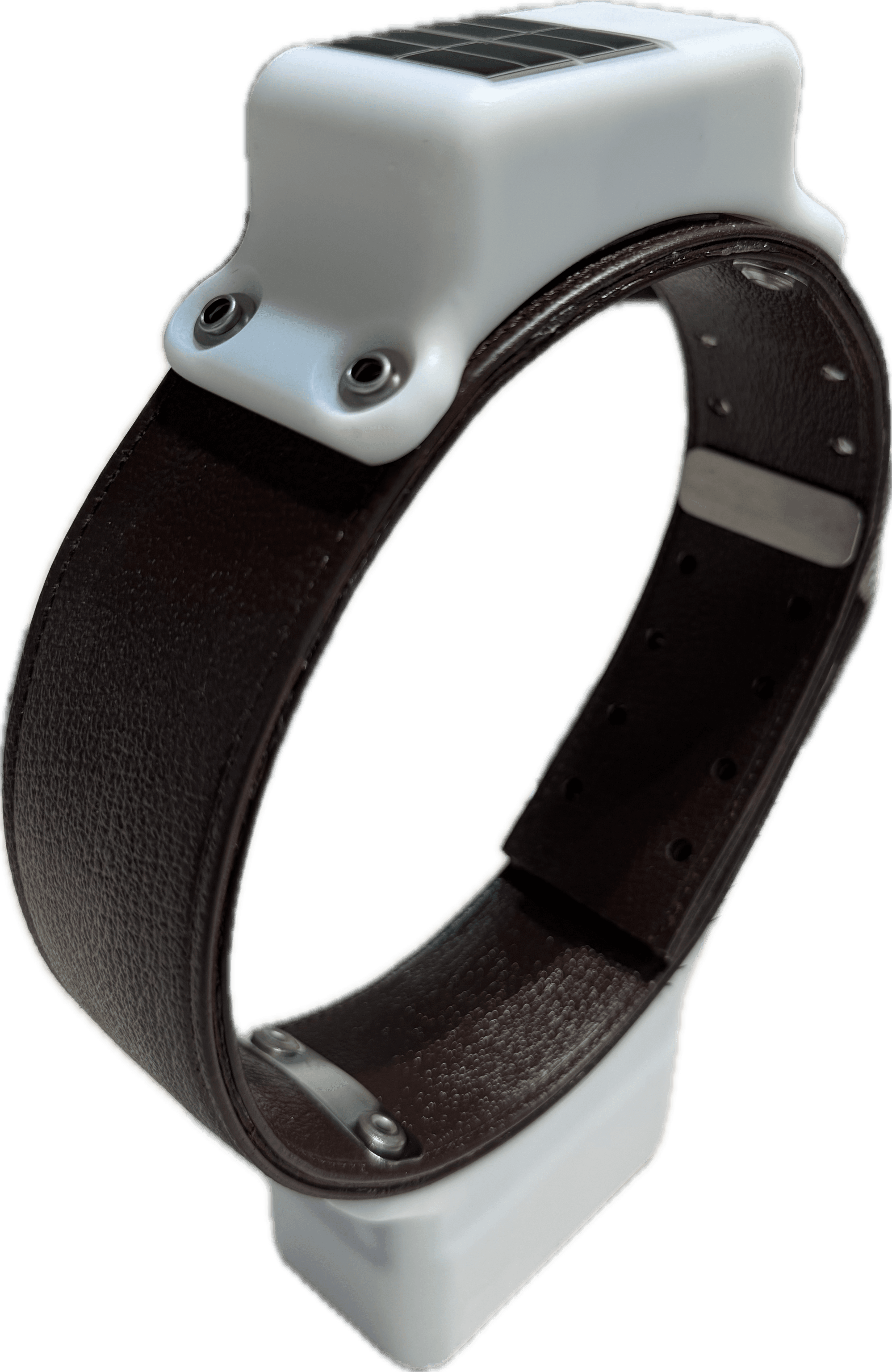
LoggLaw G2RC — GPS collar specially designed for Asiatic black bear

Reinforced belt, ~2× battery capacity, ~2× solar generation — engineered for the harshest field conditions.

Built on the proven LoggLaw G2C platform, the G2RC solves the operational risks specific to bear deployments — scratching, rubbing against trees, and data loss after hibernation or in bad weather — through purpose-built hardware. Combined with learning-release (aversive conditioning) and geofence-based re-learning, it enables a coexistence-oriented bear-management program that does not rely on lethal control.

DURABILITY
Reinforced belt — reduced loss / damage risk

A purpose-built reinforced belt withstands the scratching and tree-rubbing characteristic of bears. High-abrasion-resistant materials dramatically reduce loss and damage risk in the field.

LONG LIFE
~2× battery capacity

Battery capacity is increased by approximately 2× over the baseline platform, providing the stamina to operate reliably through hibernation emergence and prolonged bad weather, and enabling long-term monitoring.

SOLAR CHARGE
~2× solar generation

On-board solar generation is increased by approximately 2×. The device charges efficiently even under dense forest canopy and in low-sun-hour mountainous terrain, supporting consistent position-data acquisition.

What is the LoggLaw G2RC?

The LoggLaw G2RC is a GPS collar specially designed for Asiatic black bear (Ursus thibetanus japonicus). Built on the proven LoggLaw G2C platform, it solves — through purpose-built hardware — the operational risks specific to bear deployments: bear-characteristic scratching and tree-rubbing, and data loss after hibernation emergence or during bad weather.

Bear appearances in settlements and urban areas have increased nationwide in recent years, driven by poor mast years and shrinking buffer zones between human habitation and forest. This device goes beyond simple position tracking: combining capture-and-fit with learning-release (aversive conditioning) and geofence-enforced re-learning, it enables a coexistence-oriented bear-management program that does not rely on lethal control.

This page covers the G2RC's purpose-built design, the three-step learning-release process, secondary data uses (den identification and hotspot analysis), use cases, and deployment record.
Why GPS collars matter for bear management

Bear appearances near settlements are hard to predict from visual surveys and resident interviews alone, and responses end up reactive. The LoggLaw G2RC provides the data required for appearance monitoring, learning-release, and re-learning enforcement:

Instant detection of settlement / urban approach

Integration with Animal Portal triggers an auto-email at the moment a collared bear reaches a registered protected location (home, school, settlement boundary), at three distance bands (Critical 300m / Warning 600m / Caution 1,000m). Resident notification, deterrence, and stakeholder coordination can begin immediately.

Routes and behavior patterns become visible

Continuous GPS tracks reveal which routes a bear uses to enter settlements and where it spends time. Use this to identify attractants — orchards, apiaries, garbage collection points, unmanaged fruit trees — and prioritize buffer-zone work and removals.

High-frequency tracking when it counts

Default is several daily fixes. During peak appearance periods or active urban approaches, switch remotely to a high-frequency mode (2-minute GPS fixes / 5-minute uploads) — driving initial-response decisions for emergency shooting, deterrence, and road closures on finer-grained data.

Seasonal behavior and hibernation cycle

Asiatic black bears have clear seasonal cycles: spring den emergence, summer habitat use, autumn hyperphagia, winter hibernation. Annual GPS data predicts the timing and locations of elevated appearance risk — so heightened alert can be staged ahead of peak periods.

CONCEPT

Three purpose-built reinforcements for bear deployment

Building on the LoggLaw G2C platform, the G2RC addresses three operational risks long faced by bear-tracking programs — scratching and tree-rubbing, and data loss after hibernation or in bad weather — through purpose-built hardware.

01
DURABILITY

Reinforced belt for reduced loss / damage risk

A purpose-built reinforced belt dramatically reduces loss and damage risk from bear-characteristic scratching and tree-rubbing. The housing uses impact-resistant resin; the belt uses high-abrasion-resistant reinforced material.

Reinforced
Asiatic black bear specific
02
LONG LIFE

~2× battery capacity

Battery capacity is increased by approximately 2× over the baseline platform, providing the stamina to operate reliably through hibernation emergence and prolonged bad weather, and enabling long-term monitoring.

×2.0+
BATTERY CAPACITY
03
SOLAR CHARGE

~2× solar generation

On-board solar generation is increased by approximately 2×. The device charges efficiently even under dense forest canopy and in low-sun-hour mountainous terrain. The solar panel is optimally positioned on the top surface, securing a workable light-collection angle even when the bear is lying prone — maximizing in-forest charging efficiency.

×2.0
SOLAR GENERATION

LoggLaw G2RC — specifications for Asiatic black bear

Built on the reliable LoggLaw G2C platform with reinforced belt, large-capacity battery, and high-efficiency solar integrated. LTE-M cellular connectivity combines real-time monitoring with long-term operation — purpose-built for Asiatic black bear deployments.

Base platformLoggLaw G2C platform
Target speciesAsiatic black bear (Ursus thibetanus japonicus) — purpose-built
CommunicationLTE-M (Cat-M1) / NTT Docomo & Softbank 4G coverage
PositioningGPS / GNSS (~20m accuracy)
Battery capacity~2× baseline / stable operation through hibernation emergence and bad weather
Solar generation~2× baseline / charging under dense canopy and in low-sun-hour terrain
Belt strengthReinforced (Asiatic black bear specific; scratching & rubbing resistant)
Monitoring platformAnimal Portal (PC & mobile / cloud-based real-time monitoring)
Built for rapid response
Remote high-frequency mode / Proximity Alert integration

Real tracks — Asiatic black bear movement

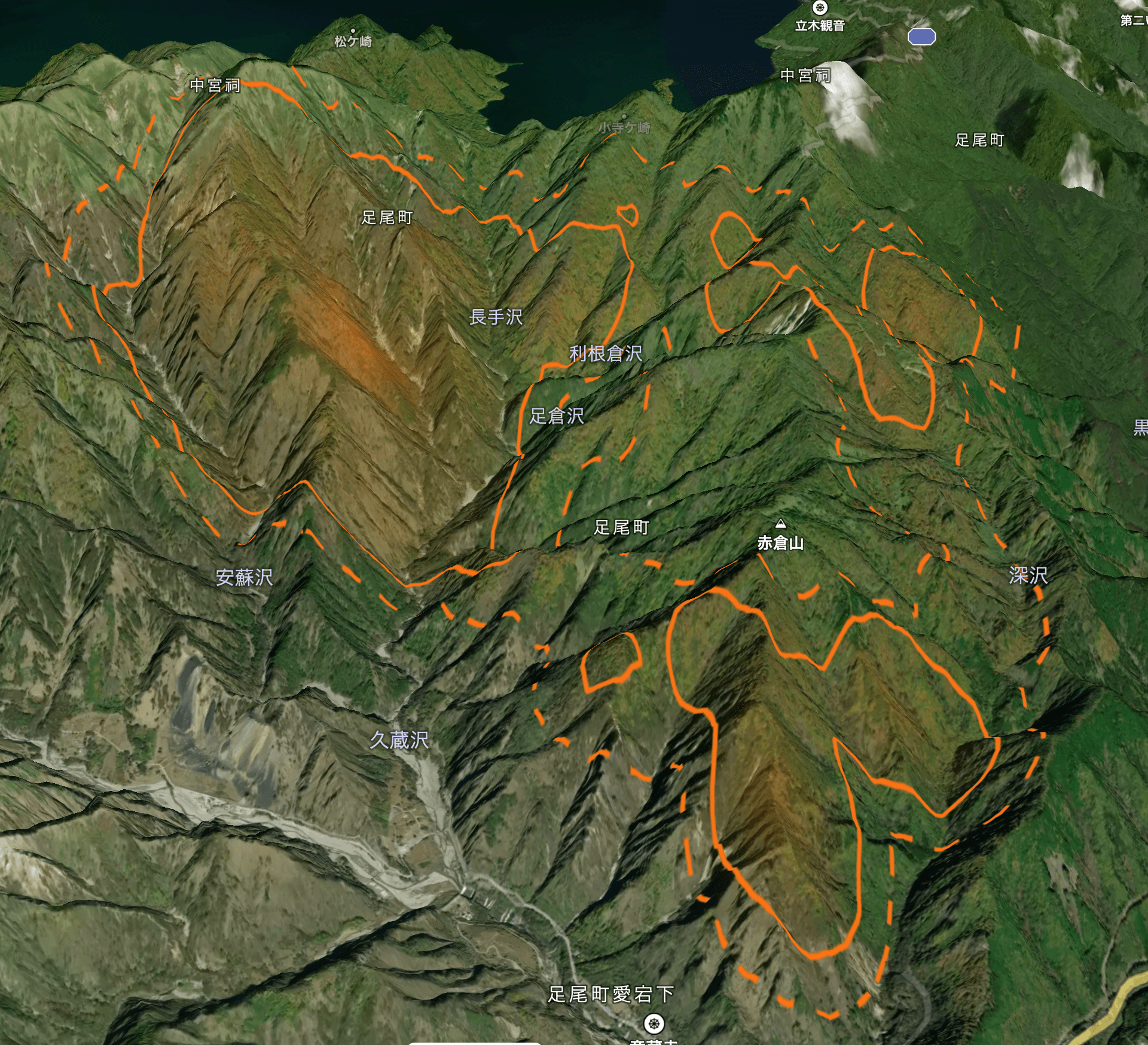
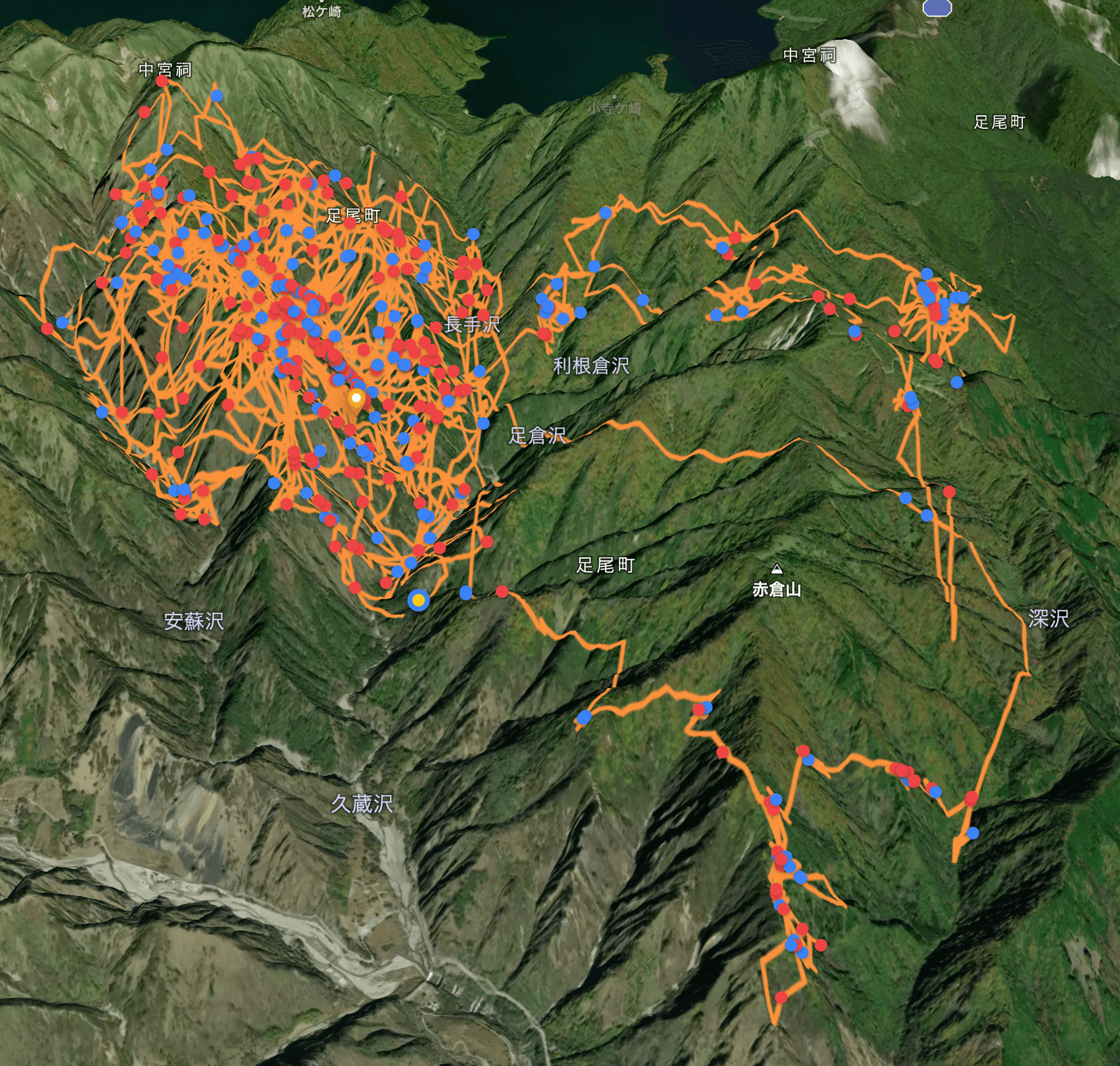
Real tracks from Asiatic black bears fitted with the LoggLaw G2C platform. Data is automatically uploaded over LTE-M and visualized as home range, approach routes, and settlement-approach events on Animal Portal.

Asiatic black bear movement route (real track)
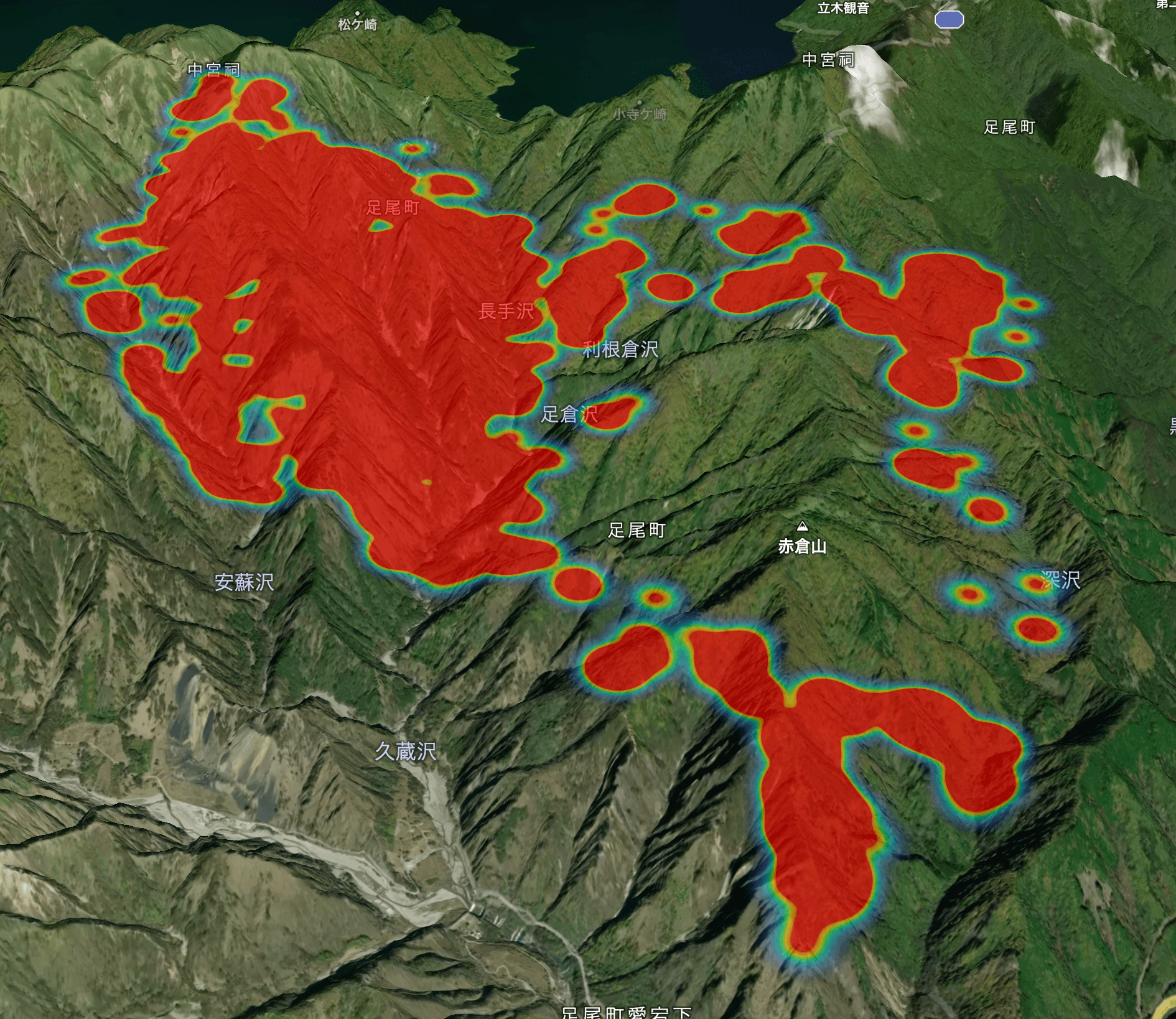
Home range heatmap
Home range heatmap
KDE home range contours
3 STEPS — LEARNING RELEASE

Learning-release (aversive conditioning) — coexistence-oriented bear management without lethal control

The G2RC's true value emerges through a three-step process after fitting: Learn → Monitor → Re-learn. In learning-release — returning a captured bear to the mountains rather than culling it — a GPS collar is indispensable. Continuous post-release monitoring plus re-approach alerts grow a bear that learns to stay away from human settlements.

STEP
01

Capture, fit, and "learning"

Capture and tranquilize the bear that appeared near a settlement, and fit the LoggLaw G2RC GPS collar. Immediately before release, deliver a strongly aversive experience — loud noises, deterrent spray — so the bear learns that "human areas are frightening places." Then release the bear back into the deep mountains.

STEP
02

Continuous cloud-based monitoring

Track the released bear's position continuously on Animal Portal. Verify remotely, around the clock, whether the bear has truly settled in the mountains — or is heading back toward human areas.

STEP
03

Geofence-enforced re-learning

Early detection: If the bear does return, a geofence ("virtual boundary line") placed just outside the settlement immediately triggers an alert. Immediate response: Field staff move in before any damage occurs and deter the bear with fireworks or similar — reinforcing the message that "this place is dangerous after all," preventing the bear from re-establishing in human areas.

Use cases for the LoggLaw G2RC

Representative use cases of the LoggLaw G2RC in municipal and research bear-management deployments.

Learning-release

Learning-release and re-learning for coexistence-oriented management

Fit the LoggLaw G2RC on captured individuals during learning-release. Continuously track post-release position; on re-approach, geofence alerts trigger early detection. Deter the bear with fireworks or similar to enforce re-learning, preventing the bear from re-establishing in human areas.

Early warning

Early warning of settlement / urban approach

Register protected locations — homes, schools, fields, settlement boundaries — on Animal Portal, and a proximity alert auto-emails registered users when a bear reaches three distance bands (Critical 300m / Warning 600m / Caution 1,000m). Information flows immediately to residents and stakeholders.

Emergency response

Real-time coordination during appearances

On detecting an urban approach, switch the device to high-frequency mode (2-minute fixes / 5-minute uploads) and share position data in real time with police, fire, municipality, and stakeholders — supporting decisions on road closures, deterrence, and emergency shooting.

Attractant ID

Identifying attractants and approach routes

Analyze where a bear lingers on the map — orchards, apiaries, garbage collection points, unmanaged fruit trees — and prioritize buffer-zone work, electric-fence installation, and attractant removal.

Seasonal behavior

Spring emergence & autumn hyperphagia

Concentrate monitoring on collared bears during periods of elevated appearance risk — spring den emergence and autumn hyperphagia. Stand up resident-notification and alert protocols ahead of these windows. Annual data also reveals each individual's cycle.

Research

Collaboration with universities and research institutions

Asiatic black bear behavioral ecology, human-wildlife interface, attractant use, anthropogenic-impact studies — used in research collaborations as well. As a Kyoto University-affiliated manufacturer, we support consultations from the study design stage onward.

DATA UTILIZATION

Accumulated data builds a "bear-resilient region"

The behavioral data accumulated by LoggLaw G2RC and Animal Portal goes beyond position tracking. Identification of hibernation sites (dens) and hotspot analysis scientifically reduce wildlife-damage risk across the region.

Identifying hibernation sites (dens)

Identify den locations from where GPS data settles or just before communication drops out. Use this for accident prevention (alerting forestry workers) and for spring alerts (notifications at the moment of emergence).

Hotspot identification

Identify locations with high GPS-point density to discover attractants (abandoned fruit trees, garbage) and optimize countermeasures (electric-fence placement).

Bear GPS collars — by communication design

GPS collars for bear vary significantly in operational feel depending on the communication scheme. The criteria below matter most for bear-appearance monitoring and rapid response.

Criterion (for bear ops)Base-station bear GPS collarDirect LTE-M bear-specific GPS collar (LoggLaw G2RC)
Instant detection of urban approachConstrained by transmission interval and base-station rangeReal-time cellular upload with Proximity Alert integration
High-frequency tracking when neededFixed transmission intervals on most modelsRemote switch to 2-minute fixes / 5-minute uploads
Wide-ranging movementData gaps outside base-station rangeContinuous capture across LTE-M coverage
Operator infrastructureLocal base station, power, maintenanceCloud only; no field infrastructure
Re-capture burden (power)Re-capture required at battery end-of-life~2× battery + ~2× solar minimizes re-capture
Belt durabilityGeneric belts on most modelsAsiatic black bear specific reinforced belt (scratch & rub resistant)
Learning-release / re-learningGeofence integration variesGeofence-triggered re-approach alerts
Subsidy (Japan)Varies by productWildlife Damage Prevention Comprehensive Subsidy eligible

* The comparison above describes general characteristics of the two communication designs and is not exhaustive of any specific vendor's product.

LoggLaw G2C platform — deployments across Japan

25
prefectures
65+
municipalities, research institutions & companies
675+
Animal Portal users

The LoggLaw G2C — the base platform for the G2RC — is deployed across 25 prefectures and 65+ municipalities, research institutions, and companies as of May 2026. This includes deployments on Asiatic black bear for appearance monitoring and behavioral research. The G2RC builds on this track record with a purpose-built design for bear operations.

Eligible for the Wildlife Damage Prevention Comprehensive Subsidy

Eligible under the Japanese Ministry of Agriculture, Forestry and Fisheries' Wildlife Damage Prevention Comprehensive Subsidy program. Based on the municipal damage-prevention plan, costs for the LoggLaw G2RC bear collar may be covered by the subsidy. Please contact your municipal office or local agricultural office for details.

Animal Portal — the operations cloud for the LoggLaw G2RC

Data from the LoggLaw G2RC is visualized on Animal Portal: map-based visualization, KDE home-range calculation, simultaneous management of multiple individuals, sighting-information sharing, and capture-report management. Along with proximity alerts at three distance bands (Critical 300m / Warning 600m / Caution 1,000m), a geofence ("virtual boundary line") set on the map triggers an instant alert to the operator's PC or smartphone the moment a bear crosses it — providing the response window of several kilometers before any damage occurs, an essential capability for the re-learning step of learning-release. CSV / GeoJSON export and PDF reports are supported.

Learn more about Animal Portal

LoggLaw G2RC — frequently asked questions

What is the difference between the LoggLaw G2RC and the LoggLaw G2C?+
The LoggLaw G2RC is the bear-specific model built on the reliable LoggLaw G2C platform. It reinforces three areas: a 'reinforced belt' that withstands bear-characteristic scratching and tree-rubbing; '~2× battery capacity' to prevent data loss after hibernation or in bad weather; and '~2× solar generation' for efficient charging under forest canopy and in low-sun-hour terrain. The housing uses impact-resistant resin; the belt uses high-abrasion-resistant reinforced material.
What is learning-release (aversive conditioning)?+
It is a method of returning a captured bear to the mountains without culling. Just before release, the bear is given a strongly aversive experience — loud noises, deterrent spray — so it learns that 'human areas are frightening places,' then it is released deep into the mountains. The LoggLaw G2RC enables continuous post-release monitoring plus geofence-based re-learning (alerts on re-approach so deterrence can be deployed), supporting a coexistence-oriented bear-management program that does not rely on lethal control.
How is the geofence feature used?+
A 'virtual boundary line' is placed on the map just outside a settlement; the moment a bear crosses it, an instant alert reaches the operator's PC or smartphone. Field staff move in before any damage occurs and deter the bear with fireworks or similar — reinforcing the message that 'this place is dangerous after all' so the bear does not re-establish in human areas. The strength of this feature is the response window: several kilometers before damage occurs.
How are hibernation sites (dens) identified?+
Den locations can be identified from where GPS data settles or just before communication drops out. This is useful for alerting forestry workers (accident prevention) and for spring alerts that trigger at the moment the bear emerges, helping you stand up alert protocols on time.
Are there deployments on brown bear (Hokkaido)?+
The LoggLaw G2RC is purpose-built for Asiatic black bear, and current operational experience centers on Asiatic black bear. For brown bear deployments, we can advise based on individual body conformation and operational needs. Please get in touch for details.
How does resident notification work during an urban approach?+
Animal Portal's Proximity Alert lets you register locations — homes, schools, fields, settlements — and auto-emails registered users when a bear comes within three distance bands (Critical 300m / Warning 600m / Caution 1,000m). The check runs in the cloud, so no collar-side configuration is required and it applies to every individual already deployed. A cooldown setting suppresses repeated notifications for the same point / individual.
Can the bear be tracked at high frequency during an emergency?+
Yes. The transmission interval on the LoggLaw G2RC is remotely switchable over LTE-M. The default is a few times per day, but during urban approaches or emergency response the device can be switched to a high-frequency mode of up to 2-minute GPS fixes and 5-minute uploads — driving initial response decisions on finer-grained data.
Is the LoggLaw G2RC subsidy-eligible?+
Yes — eligible under the Japanese Ministry of Agriculture, Forestry and Fisheries' Wildlife Damage Prevention Comprehensive Subsidy. Based on the municipal damage-prevention plan, costs for the LoggLaw G2RC may be covered. Please contact your municipal office or local agricultural office for details.

Considering the LoggLaw G2RC for your bear-management program?

We support municipalities and research institutions in tailoring the LoggLaw G2RC deployment to the bear-appearance hotspots, resident-notification workflow, and stakeholder coordination — including learning-release / geofence re-learning workflow design, subsidy use, and field trials. We can also provide product demos and proposal materials at no cost. Please get in touch.