Key findings
- 1
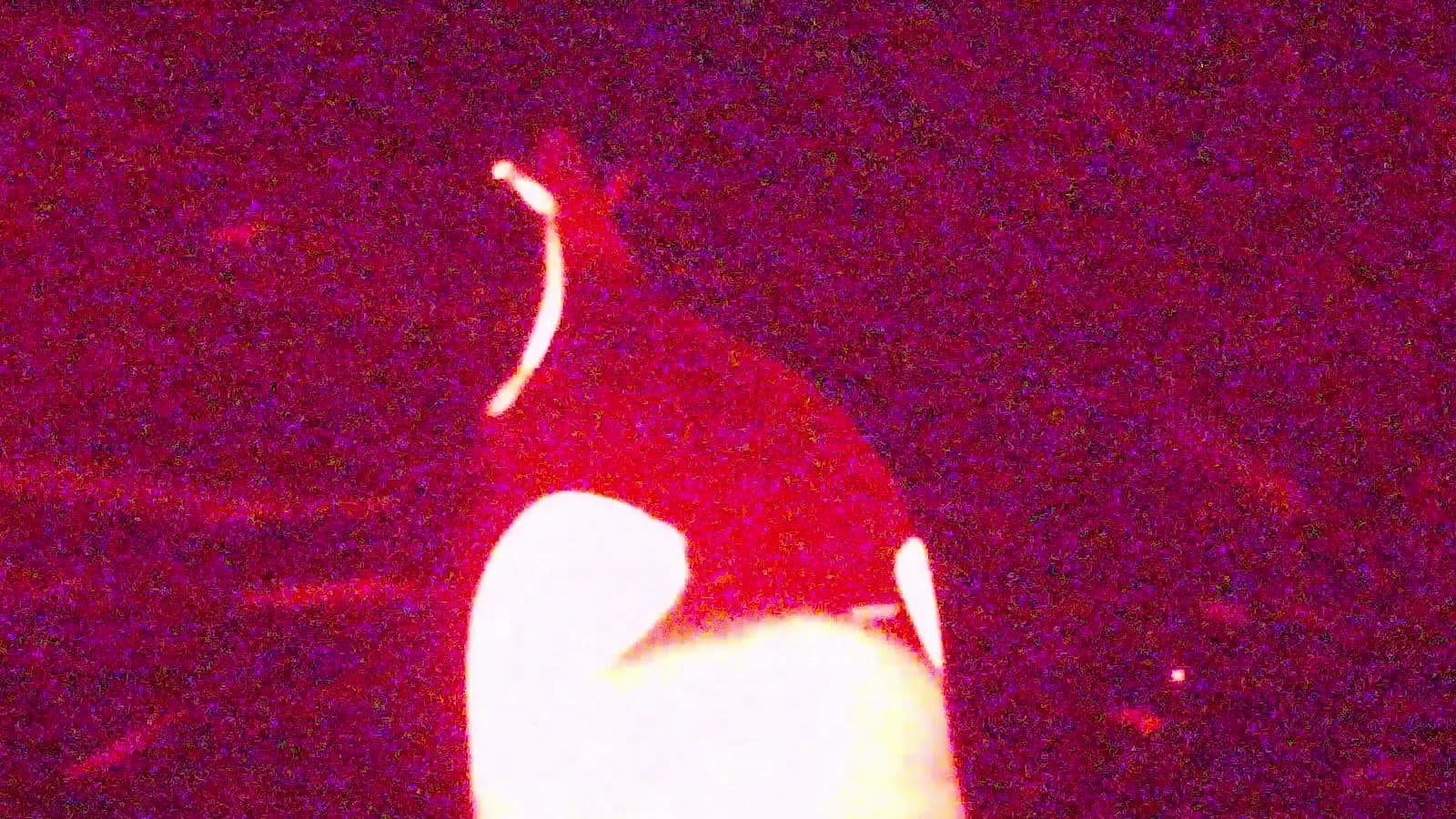
World-first animal-borne video record of king penguins capturing fish in the dark deep sea, at a mean depth of 128 ± 31 m.
- 2
136 predation attempts were identified across ~1.5 hours of footage, 118 of them successful (86.8% success rate), showing high foraging ability in the dark.
- 3
81.6% of predation events occurred during the ascent phase, suggesting a tactic of targeting prey from below.
- 4
Prey were caught while still unaware of the approaching penguin, or reacted only ~0.1 s before capture; penguins took aim from several meters away.
Study overview
The study was conducted at the Ratmanoff colony, Kerguelen Archipelago, in the southern Indian Ocean (around 49°14′S, 70°33′E), on king penguins (Aptenodytes patagonicus).
Foraging in the near-lightless deep sea was recorded with a small video logger equipped with a red-LED light source and a depth sensor.
The LoggLaw device and its role
The study used our LoggLaw CAM underwater video logger. Its red-LED lighting minimizes impact on animals while enabling filming of foraging behavior even in the light-poor deep sea.
Synchronizing video with depth data made it possible to quantify when, at what depth, and how prey were caught — visualizing the moment of predation itself, which position and depth data alone cannot capture.
Why it matters
Quantifying not only predation success and failure but the prey's reaction at the moment of capture, in the hard-to-observe dark deep sea, substantially advances understanding of marine predator foraging ecology.
It is an example of our video loggers contributing to results in a leading peer-reviewed journal in behavioral ecology.
Authors & collaborators
- Leo Uesaka (Atmosphere and Ocean Research Institute, The University of Tokyo / CEBC, CNRS, France) — lead author
- Charles André Bost (CEBC, CNRS / University of La Rochelle, France)
- Katsufumi Sato (Atmosphere and Ocean Research Institute, The University of Tokyo)
- Kentaro Q. Sakamoto (Atmosphere and Ocean Research Institute, The University of Tokyo)
Source
Leo Uesaka, Charles André Bost, Katsufumi Sato, Kentaro Q. Sakamoto (2025) Deep-sea ascending predation by king penguin and its prey reaction observed by animal-borne video camera. Ecology.
https://doi.org/10.1002/ecy.70117Related products & use cases
LoggLaw CAM — underwater video logger
Used in this study. A red-LED underwater video logger for filming foraging behavior in low-light and dark environments.
LoggLaw C Series (marine animals & birds)
Ultra-compact data loggers (geolocators / TDRs / accelerometer loggers) used on penguins and seabirds.
What is biologging — principles, history, applications
How animal-borne video loggers work and the kinds of data they capture.
Related research
Digest by
A graduate of Kyoto University's Graduate School of Informatics and UC Santa Cruz's School of Environmental Studies. As co-founder of Biologging Solutions Inc., a Japan-based biologging equipment manufacturer, he oversees deployments of the company's products with municipalities, universities, and international consortia.
A biologging researcher with field experience including gyro-logger studies of penguin behavior in Antarctica. As co-founder of Biologging Solutions Inc., he leads the development of compact data loggers, GPS collars, and video loggers built directly around real-world research needs.