LoggLaw NAD-W
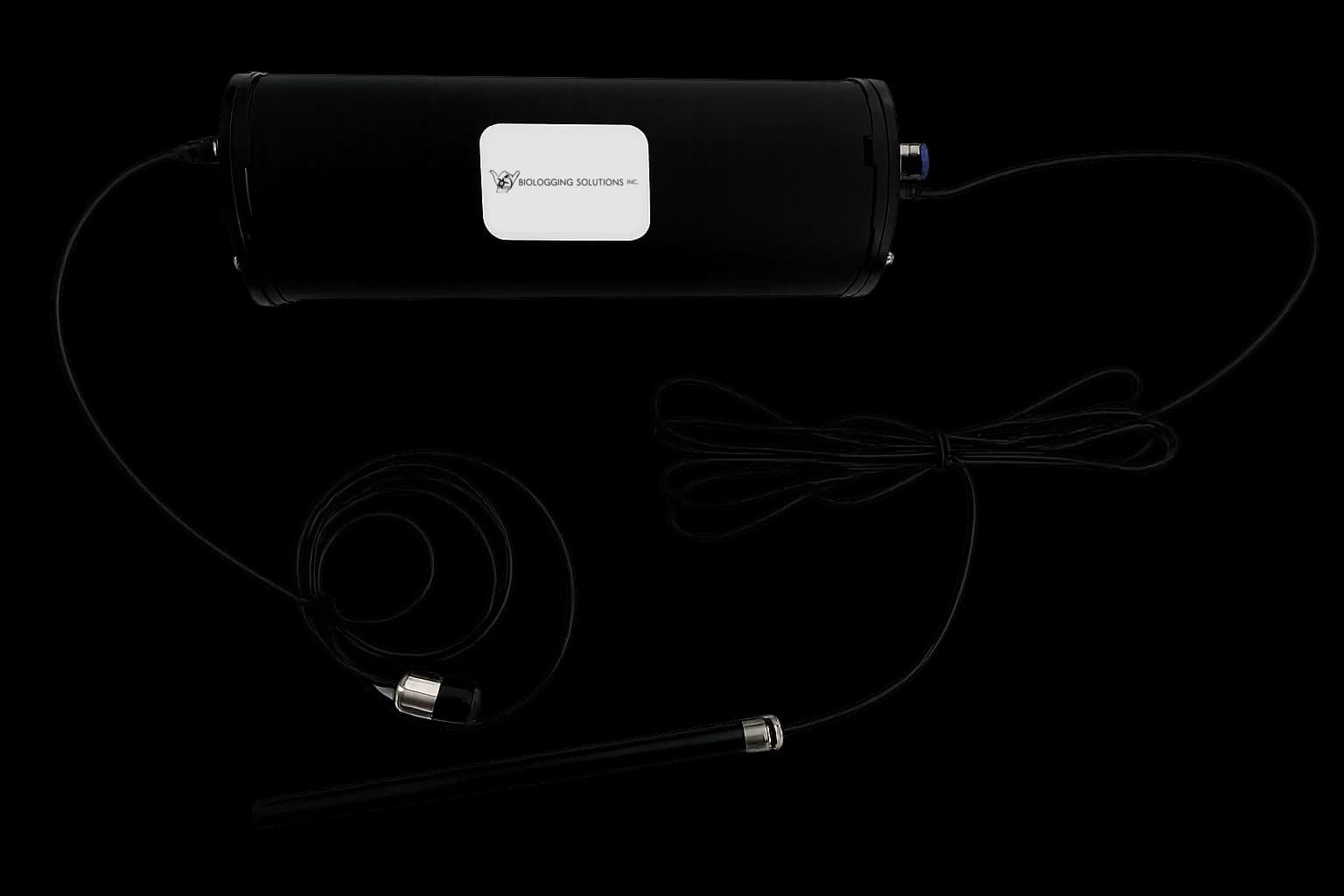
Underwater acoustic monitoring system with cloud AI analysis. A broadband hydrophone with up to 192 kHz sampling captures underwater sound with high precision and automatically detects marine mammal clicks/whistles and vessel noise (vessel sounds require site-recorded training data). With the optional LTE module, NAD-W gains Edge AI and near real-time monitoring.
Key Features
Broadband Hydrophone
Captures frequencies up to 96 kHz with broadband sound pickup. Sampled at 192 kHz / 16-bit to precisely record diverse acoustic events including marine mammal echolocation and vessel noise.
Automated Cloud AI Detection
Simply upload SD-card audio to LoggLaw Cloud and receive automated detection of a trained target species' clicks/whistles (e.g., Irrawaddy dolphin) and vessel noise (vessel sounds require site-recorded training data). Outputs include spectrograms, detection timelines, and CSV export.
Edge AI + Near Real-time Transmission (Optional)
With the optional LTE data transmission module, AI classification runs on-device and detection results are auto-transmitted to LoggLaw Cloud every 15 minutes, enabling continuous monitoring without waiting for SD card retrieval.
Deep-Rated Long-Term Deployment
Pressure housing rated to 600 m depth. Approximately 2 weeks of continuous operation on the standard (carry-on compliant) battery, with flexible deployment via floats, stakes, or anchors and easy battery swaps for long-term monitoring.
High-Endurance SD Card Storage
Records uncompressed WAV audio to industrial-grade high-endurance SD cards (up to 256 GB standard / 512 GB optional). Raw, unfiltered data is preserved so recordings can be re-analyzed as detection models improve.
Dashboard & Alerts
Visualize detection events on map, timeline, and statistical dashboards via LoggLaw Cloud. Email/SMS alerts for specific events and centralized management of multiple devices.
Use in Offshore Wind Environmental Impact Assessment (EIA)
Offshore wind EIA requires continuous assessment and monitoring, from baseline through operation, of how pile-driving and operational noise affect marine mammals. NAD-W and the citizen-science monitoring portal support the full chain from underwater-sound recording to data operations and reporting.
Construction & operational noise monitoring
Broadband recording captures pile-driving, vessel and operational noise over the long term. With the portal's construction-schedule overlay and predicted noise levels, it supports mitigation such as soft-start and work-window coordination.
Passive acoustic monitoring (PAM)
Automatically detect dolphin/whale vocalizations and vessel traffic (vessel sounds require site-recorded training data). The AI can be extended to additional species through training, supporting presence/absence and spatio-temporal distribution analysis.
Long-term, spatial monitoring & control-site comparison
Deploy multiple NAD-W buoys across both impact and control areas, with voltage, detections, maintenance history and signal coverage managed in one place. By comparing the impact–control difference across baseline / construction / operation phases, it supports study designs (BACI) that isolate construction-driven change.
Evidence & reporting
Analyze KDE hotspots, in/out-of-MPA ratios and environmental correlations. Export sighting, detection and survey data as CSV to support assessment reports and post-construction monitoring.
Configuration for target species & regulations
NAD-W records up to 96 kHz (192 kHz sampling). In waters where high-frequency echolocators such as harbor or finless porpoise (~125–140 kHz) are the primary receptors, we recommend pairing NAD-W with a dedicated high-sample-rate PAM, with NAD-W covering broadband noise, vocalizing species and the integration platform. For regulatory reporting of absolute sound levels (dB re 1 µPa), calibrated measurements are used. We propose the optimal configuration for your target species and site.
Specifications
Detailed Technical Specifications
Hardware Specifications
| Dimensions | Diameter 11 cm × Length 40 cm (main unit) |
|---|---|
| Weight | Approx. 3 kg in air (with integrated battery) |
| Depth Rating | 600 m |
| Operating Temperature | -10°C to +50°C |
| Battery Life | Approx. 2 weeks (standard battery, carry-on compliant) |
| Memory Capacity | 256 GB (standard) / 512 GB (optional) |
| Recording Duration (Continuous) | 256 GB: ~185 hours (~7.7 days) 512 GB: ~370 hours (~15.4 days) * at 192 kHz / 16-bit / Mono |
| Recording Duration (50% Duty) | 256 GB: ~15.4 days 512 GB: ~30.8 days |
| Data Interface | Removable industrial-grade SD card. System configuration via config file written to the SD card. No proprietary reader or cable connection required. |
| Connectors | Underwater connectors for hydrophone, LTE antenna, and GPS antenna (easy attach/detach) |
| Deployment | Compatible with floats, stakes, and anchors; easy battery replacement. |
Recording Specifications
| Sampling Rate | 192 kHz |
|---|---|
| Frequency Range | Up to 96 kHz (Nyquist frequency) |
| Audio Resolution | 16-bit |
| Channels | Mono |
| Data Format | WAV with embedded timestamps |
| Recording Mode | Continuous, duty-cycle, and scheduled recording are supported. With the LTE module, an alternating 30 s recording / 30 s analysis cycle runs the Edge AI on the device. |
| Signal Filtering | Raw audio is recorded without filtering. All detection and classification is performed by the AI engine, preserving original data for re-analysis with improved models. |
AI Capability
| Detection Targets (extensible via training) | Detects presence/absence of a trained target species' vocalizations per recording segment. Irrawaddy dolphin clicks/whistles and vessel noise are examples; train an acoustic model per target to extend the classifiable set (vessel sounds require site-recorded training data). Vessels can also be classified by type (long-tail boat, cargo vessel, etc.). |
|---|---|
| Custom Models | Additional detection models for dugong vocalizations, snapping shrimp, fish choruses, and more (discussed separately) |
LTE Data Transmission Module (Optional)
| Edge AI Analysis | Real-time on-device acoustic classification (Irrawaddy dolphin, vessel noise, etc.; vessel sounds require site-recorded training data) |
|---|---|
| Communication | 3G/4G LTE. SIM card and cellular data plan to be procured by the customer. |
| Data Transmission Interval | Every 15 minutes |
| GPS | Daily position fix (supports tracking of dozens of devices) |
| Behavior During Communication Loss | On-device data caching during communication interruptions; automatic retransmission upon recovery |
Specifications are subject to change without notice.
* Specifications are subject to change without notice for improvement purposes.
Connected Citizen-Science Monitoring Portal
Acoustic data collected by NAD-W can be aggregated into a cloud-based citizen-science monitoring portal. Sightings, stranding reports, device status and analysis are unified on a single map that connects researchers, authorities and citizens on one operational board. It can be configured for any target animal, from terrestrial GPS collars to marine acoustic buoys, and the Irrawaddy dolphin conservation project on Songkhla Lake, Thailand is one such example.
What the portal does
Live monitoring map
Layer sightings, vessel/construction noise, protected areas and sensor status to grasp the whole site in near real time (citizen sighting reports are immediate; device data arrives via LTE every ~15 min, or after SD-card retrieval without LTE). Timeline playback reconstructs past detections chronologically.
Acoustic device monitoring
Manage voltage, daily detection counts, last-seen and status for every NAD-W buoy in one place. Low-battery and offline conditions trigger browser-push and LINE alerts, with thresholds set per project.
Citizen sighting & stranding reports
Report sightings or strandings from mobile with one-tap GPS or a map pin. Multilingual UI, photo attachment and anonymous posting are supported, and emergencies are routed to response teams instantly.
Offline-first field surveys
Record location, weather and observation events on-device even without connectivity at sea or in the field. Data auto-uploads on reconnection and behaves identically on iPhone and Android.
Statistics & deep analysis
Beyond KPIs like total sightings, group size and seasonal trends, analyze KDE hotspots, in/out-of-MPA ratios and acoustic breakdowns by target species / vessel / construction noise.
Notifications & data integration
Push key events via browser and LINE. Export sighting, detection and survey data as CSV, and securely share read-only feeds with partner organizations.
Portal screens
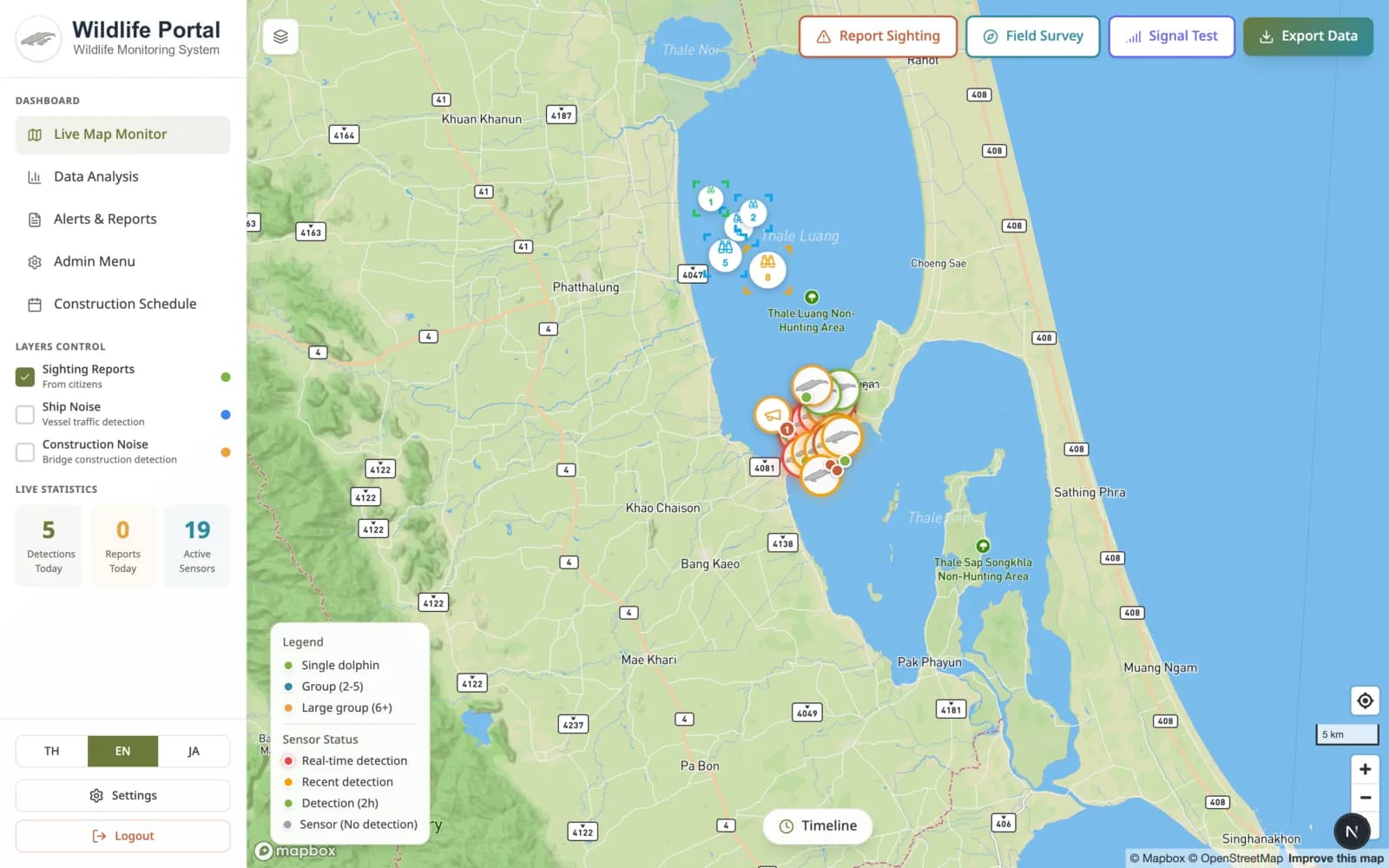
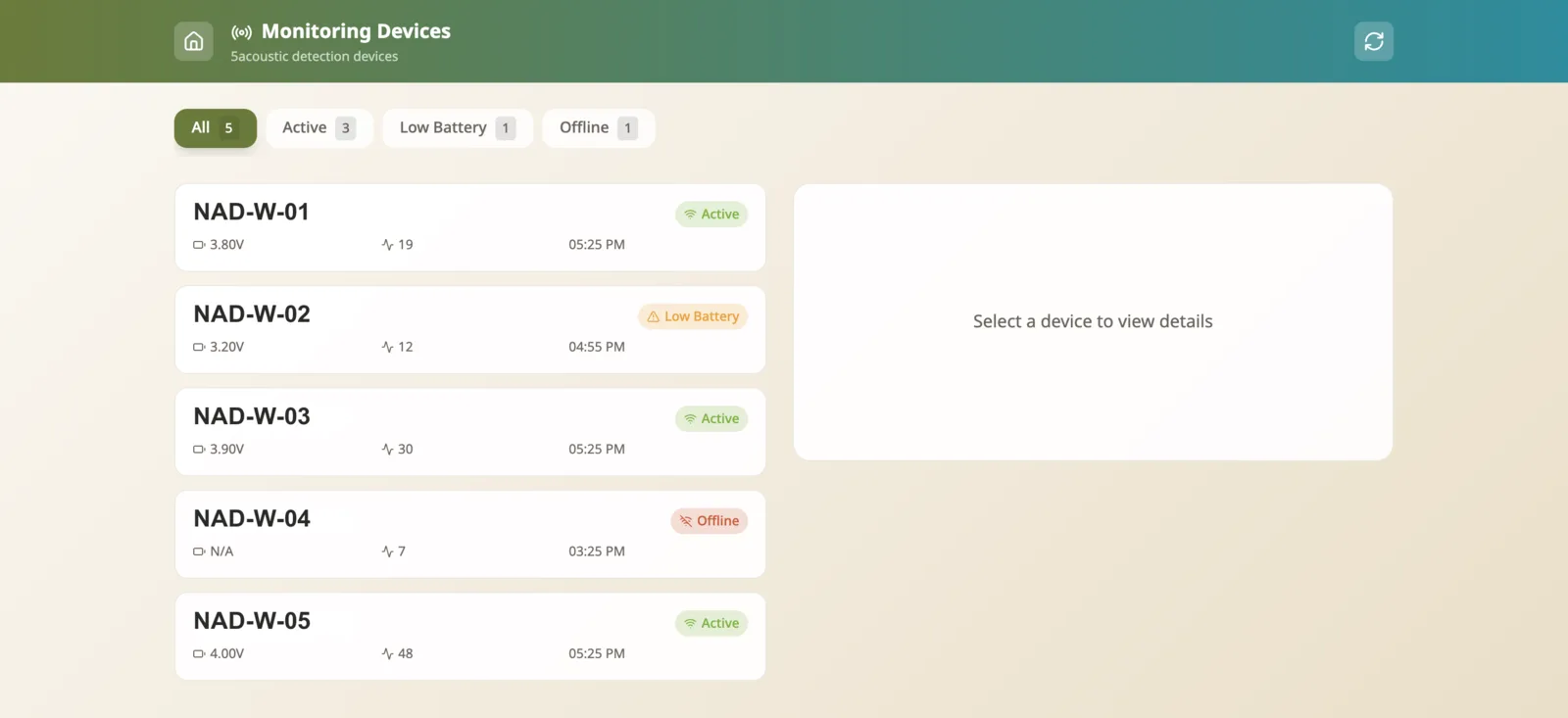
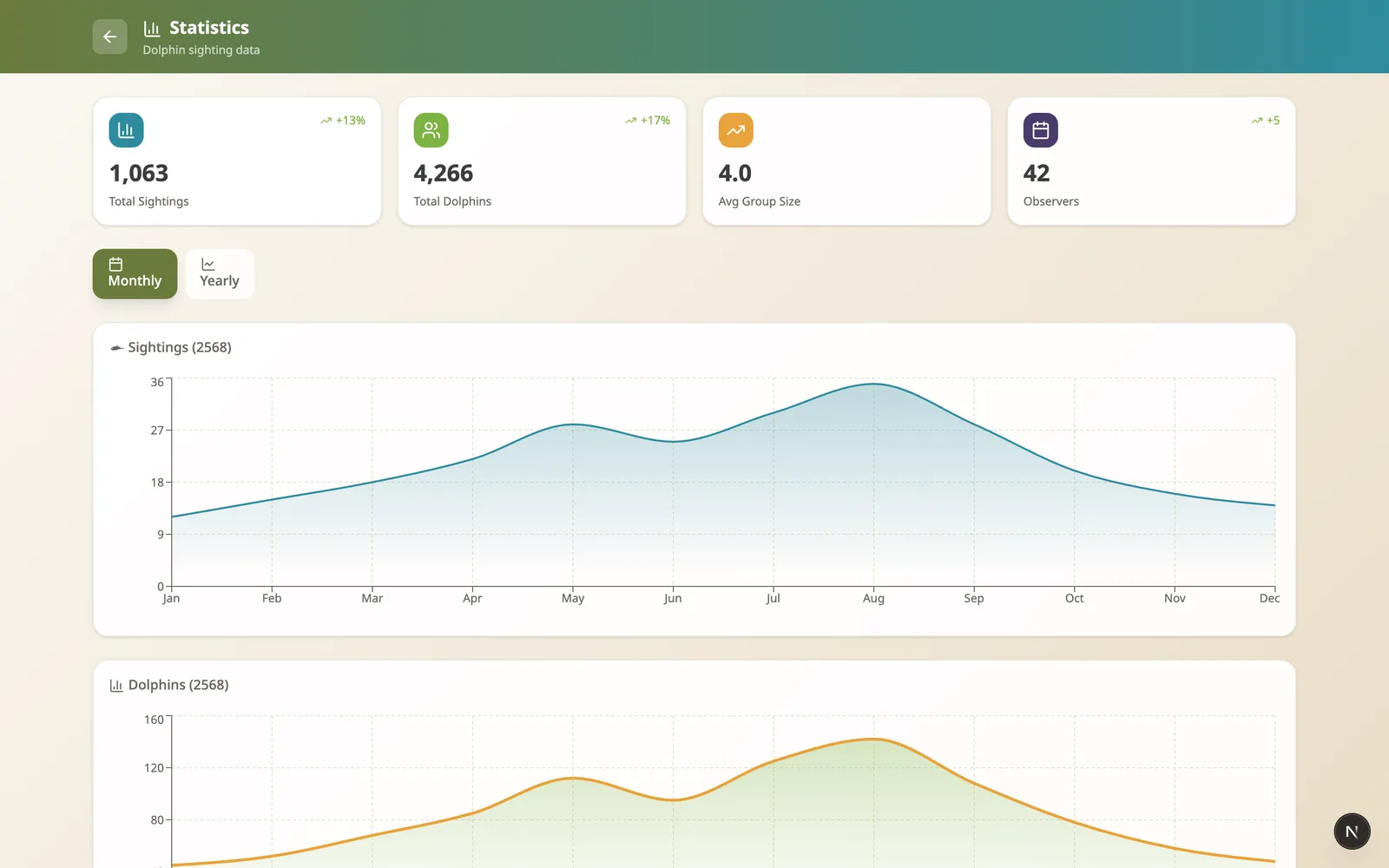
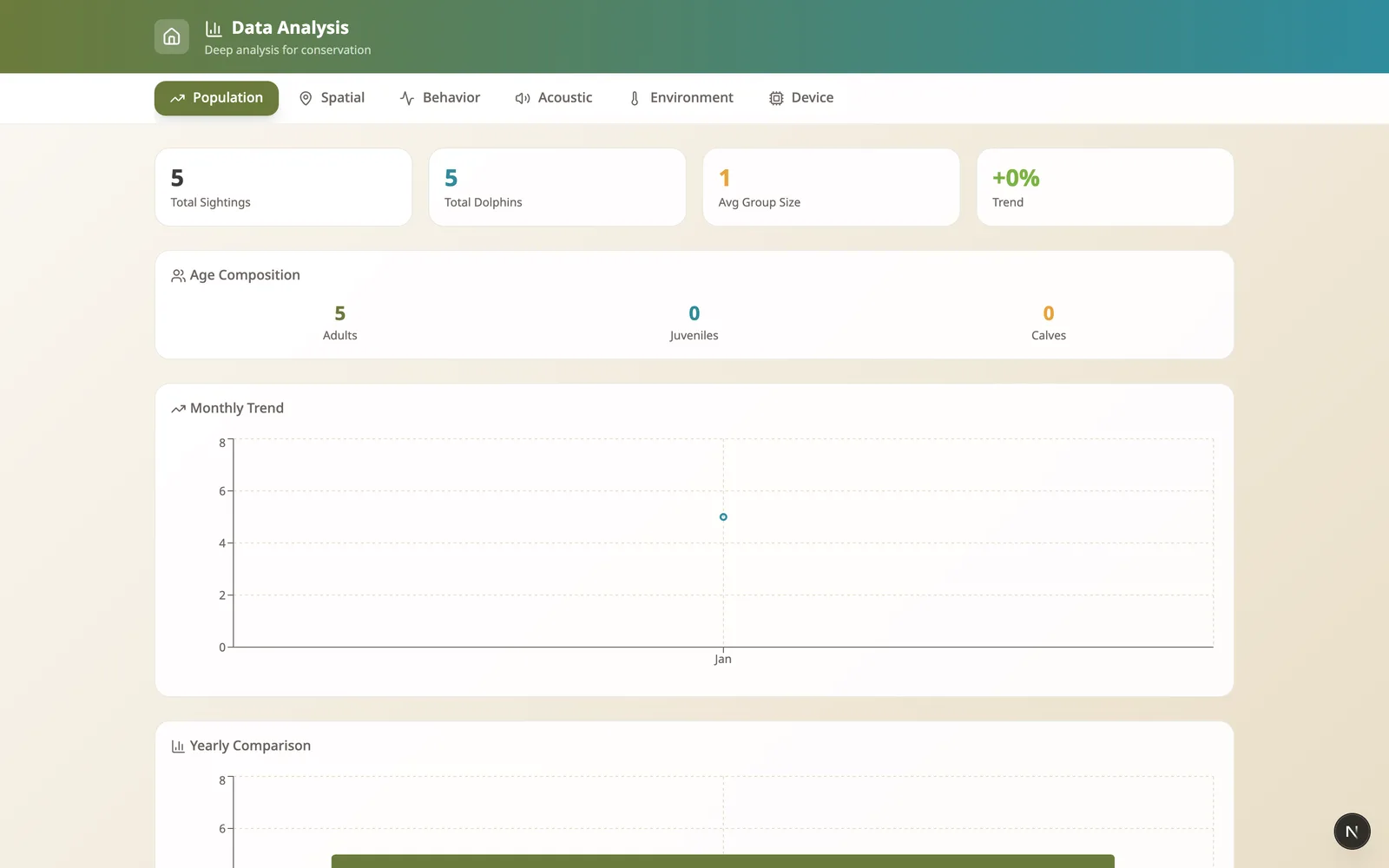
* Screens show the platform running for the Irrawaddy dolphin conservation project on Songkhla Lake, Thailand. The same foundation can be configured for other target animals such as monkeys or deer.
Inquire About LoggLaw NAD-W
For detailed product information, pricing, case studies, and more, feel free to contact us. Our expert staff will propose the best solution for your needs.